12460 Crabapple Rd #103, Alpharetta, GA 30004

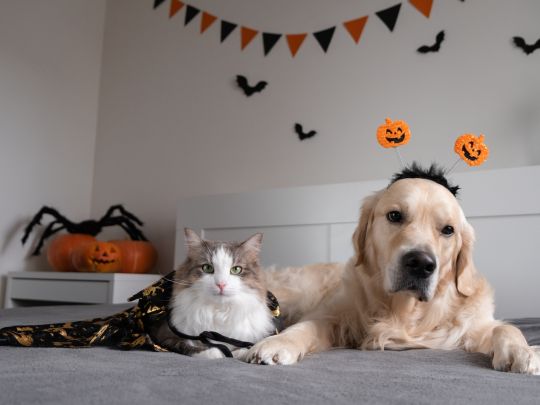
A tiny superhero cape, pumpkin sweater, or lion mane can make your pet look adorable. For many families, dressing up a dog or cat is part of celebrating Halloween, taking holiday photos, or attending a pet-friendly event.
But pets do not understand costumes the way people do. An outfit that looks harmless may restrict movement, trap heat, irritate the skin, interfere with breathing, or cause significant stress. Loose decorations and small costume pieces may also become choking hazards if a pet chews them.
The ASPCA recommends dressing pets only when they are comfortable with it. Costumes should never restrict a pet’s movement, vision, breathing, or ability to communicate normally.
Understanding what makes a pet costume safe can help you decide whether dressing up is appropriate for your dog or cat.
Why Can Pet Costumes Become a Health Risk?
Pet costumes vary considerably. A lightweight bandana is very different from a full-body outfit with sleeves, elastic bands, a hood, and attached decorations.
Problems often arise when a costume changes the way a pet can naturally move, see, hear, or breathe. An outfit may also become dangerous when a frightened pet tries to remove it by chewing or pulling at the material.
The ASPCA specifically advises checking costumes for dangling or easily chewed pieces and making sure an outfit fits properly. Poorly fitted costumes can become caught on the pet or surrounding objects and cause injury.
Some pets simply dislike wearing clothing. For these animals, the emotional stress caused by dressing up may be enough reason to skip the costume.
What Health Problems Can Pet Costumes Cause?
Even a costume that appears comfortable at first can create problems once your pet starts walking, playing, or trying to remove it. Knowing the most common risks can help you spot trouble early and decide when an outfit needs to come off.
A Tight Costume Can Restrict Normal Movement
Dogs and cats need to move their shoulders, legs, necks, and tails freely. A costume that is too tight around these areas may make normal movement difficult.
Watch your pet walk after putting on an outfit. A dog that suddenly takes unusually short steps, refuses to walk, or repeatedly turns toward the costume may be uncomfortable. A cat may crouch, freeze, walk strangely, or attempt to hide.
Pay particular attention to elastic straps around the legs, chest, neck, and abdomen. They should not dig into the skin or create pressure.
Your pet should be able to sit, stand, walk, and lie down normally while wearing the costume.
Masks and Headpieces Can Interfere With Sight and Hearing
A hat, mask, wig, or hood may complete the look, but headpieces are often unnecessary for pets.
Material that moves over the eyes can interfere with vision. Anything covering or pressing against the ears may make it harder for your pet to hear what is happening nearby.
This can be particularly stressful in unfamiliar or busy surroundings. Your pet may already be processing unusual noises, visitors, decorations, and people wearing costumes.
The ASPCA recommends avoiding costume headpieces and ensuring that anything a pet wears does not interfere with sight or normal behavior.
A simple costume that leaves the face, ears, and neck unobstructed is usually a more practical choice.
Costumes Can Contribute to Overheating
Dogs and cats regulate body temperature differently from people. Adding thick fabric or several layers can make it harder for them to remain comfortable, especially during activity or warm weather.
This deserves extra consideration in Georgia, where temperatures may still be relatively warm during fall events.
Pay attention to excessive panting, heavy drooling, restlessness, weakness, or difficulty breathing. These can be signs of heat stress and should not be ignored. The American Veterinary Medical Association advises seeking emergency veterinary care for serious signs such as excessive panting, unsteadiness, abnormal gum or tongue color, or collapse.
Remove the costume immediately if your pet appears too warm.
Dogs with short noses, older pets, overweight pets, and animals with certain heart or respiratory problems can face greater risks from overheating.
Small Costume Pieces Can Become Choking Hazards
Buttons, bells, sequins, fake eyes, beads, bows, plastic decorations, and other accessories can attract curious pets.
A dog may chew an attached decoration while trying to remove the costume. Cats may become interested in dangling strings, feathers, or ribbons.
Once detached, a small piece can be swallowed. Depending on its size and shape, it could become a choking hazard or cause problems farther along the digestive tract.
Inspect the entire costume before putting it on your pet. Look for anything that could easily be bitten, pulled, or torn away.
If an accessory serves no practical purpose, removing it may make the costume safer.
Fabric and Fasteners Can Irritate the Skin
Some pets have sensitive skin. Rough fabric, seams, elastic, hook-and-loop fasteners, or tight straps can rub against areas such as the neck, chest, belly, and legs.
Long-haired pets may also get fur caught in zippers or fasteners.
Check your pet’s skin after trying on a costume. Look for redness, rubbing, swelling, hair pulling, or other signs of irritation.
Do not put clothing over an existing wound, rash, surgical site, or irritated area unless your veterinarian has specifically recommended protective clothing for that condition.
How Can You Tell If Your Pet Hates the Costume?
Pets cannot tell us that an outfit feels uncomfortable, so their behavior matters.
Some signs are obvious. Others can be easy to dismiss because the pet looks “funny” while wearing the outfit.
Remove the costume if your pet:
- Freezes or refuses to move
- Tries repeatedly to bite or pull off the clothing
- Hides or attempts to escape
- Pants when the environment is not hot
- Trembles or appears unusually restless
- Holds the ears back
- Keeps the tail tucked
- Vocalizes unusually
- Becomes irritable when approached
- Walks differently after the costume is applied
A pet that normally enjoys attention may suddenly avoid interaction when uncomfortable.
Do not force your pet to remain dressed for photos or an event. If their behavior changes after the costume goes on, removing it is the simplest way to determine whether the clothing is contributing to the problem.
Are Costumes More Stressful for Cats?
Many cats are particularly sensitive to anything that restricts their bodies or changes normal movement. A cat that tolerates a collar may still dislike clothing around the chest, abdomen, or legs. Some cats immediately freeze or crouch when clothing is placed on them.
Rather than assuming your cat will adjust, watch their response from the beginning. If your cat tries to escape, becomes agitated, hides, or repeatedly attempts to remove the clothing, skip the costume. A decorative breakaway collar or another low-contact option may be more comfortable when appropriate for your cat.
How Should You Introduce a Costume to Your Pet?
Do not wait until a party or Halloween night to discover how your pet reacts to an outfit. Introduce it gradually in a familiar environment.
First, allow your pet to see and smell the costume. Reward calm behavior with praise or an appropriate treat. Next, put the costume on briefly. Keep the first session short and watch your pet closely.
If your pet remains relaxed, gradually increase the amount of time they wear it. Check the fit again after they begin walking. Never leave your pet alone while wearing a costume. Even a properly fitted outfit can shift, become tangled, or get caught on furniture or another object.
What Should You Check Before Your Pet Wears a Costume?
Before taking photos or heading to an event, perform a quick safety check.
Make sure the costume:
- Allows normal breathing
- Does not press tightly against the neck
- Leaves the eyes and nose unobstructed
- Does not interfere with hearing
- Allows normal walking and sitting
- Does not restrict bathroom use
- Has no tight elastic around the legs
- Contains no easily swallowed decorations
- Cannot become tangled around the pet
- Does not cover identification tags
Your pet should also remain securely identified. Halloween activity, unfamiliar people, and frequent door opening can make frightened pets more likely to escape. The ASPCA recommends proper identification and secure leashing when pets are outside during Halloween activities.
When Should You Remove a Pet Costume Immediately?
Take the costume off if your pet develops difficulty breathing, unusual panting, weakness, abnormal movement, significant agitation, or signs of overheating.
You should also remove it if the outfit becomes wet, damaged, twisted, or caught around a limb. If your pet chews off and swallows part of the costume, contact a veterinarian promptly. Do not assume a swallowed piece will pass safely.
Breathing difficulty, collapse, severe weakness, choking, or significant heat-related symptoms require urgent veterinary attention. If you are uncertain whether your pet’s symptoms require immediate treatment, contacting a veterinarian in Alpharetta can help you determine the appropriate next step.
A Costume Is Optional – Your Pet’s Comfort Is Not
There is nothing wrong with skipping the elaborate costume. A festive bandana, bow attached safely to a collar, or themed leash may give you the holiday look you want without covering much of your pet’s body. The ASPCA also suggests a festive bandana as an alternative when a pet is uncomfortable in a full costume.
For some pets, no clothing at all is the right choice. The goal should never be getting the perfect photograph at the expense of your pet’s comfort. A relaxed dog or cat enjoying the activity is much more important than an elaborate outfit.
Keep the Celebration Fun Without Compromising Their Comfort
Your pet does not need a costume to be part of the celebration. If you choose to dress them up, keep the outfit simple, supervise them closely, and pay attention to what their behavior is telling you.
When something does not seem right, Milton Animal Hospital is here to help Alpharetta families make informed decisions about their pets’ health. Led by Dr. Forester Gholston, a University of Georgia-trained DVM, the practice provides care ranging from wellness and diagnostics to urgent and surgical services.
Whether you have questions about a minor irritation or need help with a more urgent concern, you deserve clear answers about your pet’s condition. If you have been searching for a vet near you in Alpharetta, schedule a visit and give your dog or cat veterinary care centered on their health, comfort, and individual needs.
Frequently Asked Questions
1. Is it safe to put a Halloween costume on my dog?
Ans: It can be safe if your dog is comfortable and the costume fits correctly. The outfit should not restrict breathing, vision, hearing, walking, or normal body movement. Remove it immediately if your dog becomes distressed, overheated, or repeatedly tries to take it off.
2. Can I put a costume on my cat?
Ans: Some cats tolerate simple clothing, but many dislike having their bodies restricted. Introduce the costume gradually and watch your cat’s behavior closely. Never force a cat to remain in an outfit when they are hiding, freezing, struggling, or trying to remove it.
3. Where can I have my pet checked if a costume causes an injury in Alpharetta?
Ans: If a costume causes skin irritation, pain, abnormal movement, or another health concern, Milton Animal Hospital can evaluate dogs and cats in Alpharetta. The hospital provides wellness, diagnostic, urgent, surgical, dental, and other veterinary services for pets.
4. What should I do if my pet swallows part of a costume?
Ans: Contact a veterinary professional promptly. Small buttons, decorations, strings, fabric, and plastic pieces can create choking or gastrointestinal risks. Tell the veterinary team what your pet swallowed, approximately how much, and when it happened.
5. Can Milton Animal Hospital help if my pet needs urgent care after a Halloween accident?
Ans: Yes. Milton Animal Hospital lists urgent care among its full-service veterinary offerings in Alpharetta. If your pet develops an urgent problem after swallowing an object, becoming injured, or experiencing another Halloween-related incident, contact the hospital for guidance on appropriate care.
6. How can a veterinarian in Alpharetta help me decide whether costumes are safe for my pet?
Ans: A veterinarian can consider your pet’s age, breed, medical history, mobility, skin condition, and respiratory health. At Milton Animal Hospital, Dr. Forester Gholston and the veterinary team provide care across different life stages, including preventive care, diagnostics, urgent care, and surgical services when needed.